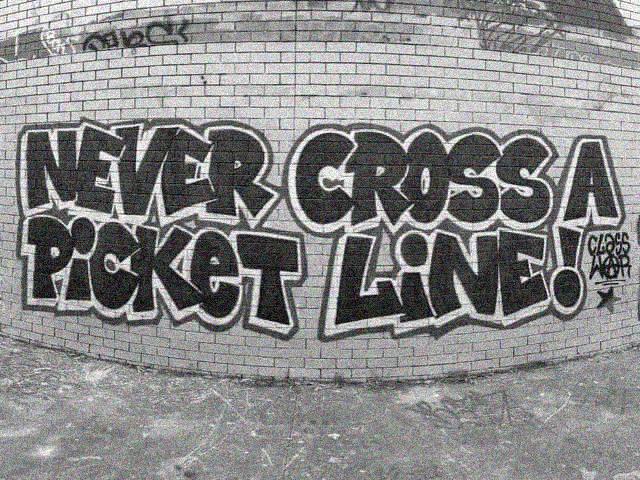
For this years Mayday we have decided to share the story of the 1917 Coledale Shooting
In the dead of night on August 25, 1917, a scab loyalist shovelling coal aboard the Sydney-to-Nowra passenger train was struck by a bullet as the train slowed through a bend at Coledale. The shooting took place in the middle of the most explosive industrial conflict Australia had ever seen: the 1917 Great Strike, a mass walkout that pulled nearly 100,000 workers out of railways, mines, waterfronts and mills across New South Wales and Victoria.
The trigger for the general strike had been a new time‑and‑motion card system imposed at the Randwick railway workshops – a piece of scientific management designed to squeeze more labour out of every worker. But the real fuel was something deeper: wartime price‑gouging, a 30% crash in real wages, and bitter class tensions that had been building ever since the war began.
In the Illawarra coalfields, those tensions had an angry, organised edge. The region’s miners had absorbed the militant, anarcho‑syndicalist ideas of the Industrial Workers of the World – the “Wobblies”. The preamble of their own union, the Australasian Coal and Shale Employees’ Federation, was lifted straight from the IWW:
“The working class and the employing class have nothing in common … Between these two classes a struggle must go on until all the workers of the world organise as a class, take possession of the earth and the machinery of production and abolish the wages system.”
So when scab labour was brought in to move coal and keep trains rolling, the miners of the northern Illawarra did not simply shrug. Miners took direct action that the Wobblies had always preached: hit the class enemy where it hurts.
TWO WOBBLIES IN THE CROSSHAIRS
Almost immediately after the shooting, two members of the Coledale miners’ lodge – Fred Lowden and James McEnaney – were arrested and charged with “shooting with intent to murder”.
The charges were entirely trumped‑up. Lowden, an English‑born coalminer who had arrived in Australia in 1913, was a known IWW supporter and a fierce opponent of conscription. But that was enough for the authorities. When they raided Lowden’s house, they seized his personal library and allegedly found bullets. He always denied any involvement in the shooting.
The bail set for the two men was £1500 each – an astronomical sum at the time. That was the point: the state wanted these Wobblies to rot, and it wanted everyone else to see what happened to workers who fought back.
But the miners of the Illawarra did something magnificent. The striking miners raised the cash to bail out Lowden on the same day, and McEnaney the following morning. Not a penny came from the bosses, and not a prayer was offered in court. This was working‑class solidarity in action – the kind that the bosses and their police had always feared.
A month later, the Crown offered no evidence. The case was dropped. But the government was not finished with the Wobblies.
THE STATE STRIKES BACK
The Coledale shooting was not an isolated piece of wildcat revenge. It was a symptom of a much broader, officially organised war against the IWW.
By 1916, Prime Minister Billy Hughes had already decided that the Wobblies were a threat to the war effort. In September 1916, twelve IWW leaders – the “Sydney Twelve” – were arrested on fabricated charges of treason, arson and sedition. A few months later, Hughes rammed the Unlawful Associations Act through federal parliament in a mere five days, declaring the IWW an unlawful organisation. Membership became a criminal offence; non‑Australian‑born Wobblies could be deported; and anyone who “advocated or encouraged” the destruction of property (including strike action that might impede “warlike preparations”) faced six months in gaol.
The Act was aimed squarely at the IWW, but its language was broad enough to criminalise virtually any militant working‑class activity. As the Guardian has noted, Australia’s history of banning political groups “has been neither wise nor necessary” – but that didn’t stop the wartime state from using the bludgeon.
In the Illawarra, this repression had a personal face. Although Lowden was discharged in October 1917, he was blackballed from the industry and refused compensation. A man who had made a false accusation against him, in collusion with police, was later convicted – but Lowden got nothing. He eventually found work in Coaldale and Corrimal collieries, and would go on to become President of the Southern District Miners’ Federation for twenty‑four years. But the stigma and the blacklist followed him for years.
WHAT THE COLEDALE SHOOTING MEANS FOR US
Why should anarchists still care about a 100‑year‑old bullet fired into a scab‑manned train?
Because the Coledale shooting shows us the real logic of class struggle. The IWW did not ask the state for permission. It did not put its faith in parliamentary reforms or polite petitions. When the bosses broke the strike and brought in strikebreakers, Wobblies did what the Wobblies had always said: they took direct action.
And the state responded exactly as it always does – with cops, courts, bail so high it might as well be a sentence, special “unlawful association” laws, deportation threats, and a blacklist meant to starve the militants out. The forms have changed, but the class war has not. Today, when the state passes “anti‑protest” laws, when it criminalises solidarity with refugees or ecological defenders, when it puts non-association orders on members of Blockade Australia– it is the same system that once declared the IWW an illegal organisation and locked up the Sydney Twelve for the crime of opposing conscription.
Yet the miners of the Illawarra did something that remains an inspiration: they refused to be alone. They raised bail together. They turned a night‑time shooting into a lesson in working‑class solidarity. And though Lowden was blacklisted, he never stopped organising – riding a white horse at the head of May Day processions for decades afterwards.
The Coledale shooting was a moment when the workers of Wollongong showed that they would not let their comrades be crushed without a fight.
May Day is not a picnic. It is a reminder that the war between the classes is still being fought